Decide whether the shell needs a partial or full bake
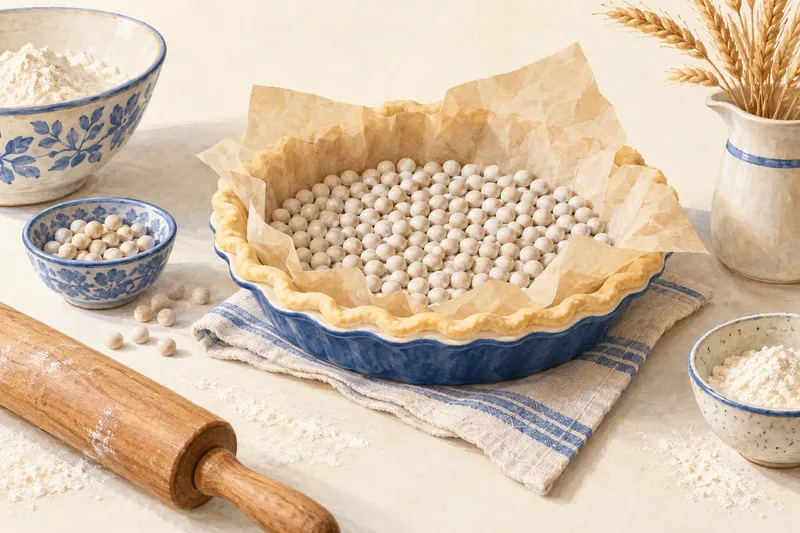
Blind baking means baking the crust before filling it. A partial bake leaves more cooking for the filled pie; a full bake prepares a shell for a filling that will not bake it further. Check that distinction before choosing an oven time.
A documented side-by-side schedule
Sally’s blind-baking tutorial uses a chilled crust in a 9-inch dish at 375°F. It begins with parchment and weights pressed against the sides, baking about 15–16 minutes, until the edges are set and starting to brown. After carefully removing the hot weights, its method docks the base and returns the shell to the oven.
Scroll the table sideways if needed.
| Intended next step | Additional weight-free bake in that method | Base cue |
|---|---|---|
| Fill, then bake again | About 7–8 minutes | Beginning to brown |
| Add a no-bake filling | About 14–15 minutes | Golden brown |
The times are for that dough, dish, and method. They are inspection points, not a schedule for every frozen crust, deep dish, or pastry formula. A full bake must finish the base, not just darken the exposed rim.
Support the sides before the structure sets
Roll without stretching the dough into the dish. Settle it into the corners and chill according to the recipe. King Arthur’s shrinking-crust guidance explains why dough preparation and rest matter; weights cannot completely correct dough stretched tightly over the pan.
Use enough weights for the method to support the sides, rather than a small pile only in the middle. Line the shell so the weights can be lifted safely. Handle them as hot equipment when removing them, and keep the dish supported on a stable surface.
Match docking and filling to the complete pie
Docking lets steam escape, but a hole can also be a path for liquid filling. The example above docks after the weighted stage; do not automatically poke an unbaked shell when another recipe uses a different method or seal.
For a no-bake filling, the tutorial cools the finished shell before filling. For a pie baked again, follow that complete recipe’s filling and oven sequence. Do not add all the full-bake time simply because a partially baked base looks pale—the second bake is part of the plan.
Sources & scope
Reference synthesis and arithmetic where indicated. No first-hand kitchen testing is claimed.
- Keeping pie crust from shrinkingKing Arthur Baking · Accessed 2026-10-06
- How to Par-Bake Pie CrustSally’s Baking · Accessed 2026-10-06