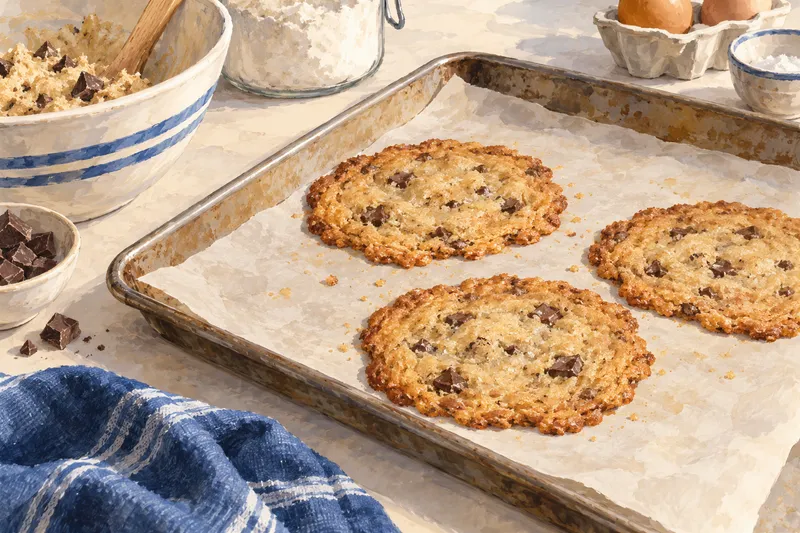
Flat cookies can have more than one cause. Start by comparing the result with the recipe’s intended style, then check what changed in the ingredients or method. This guide concerns drop cookies; it is not a universal fix for cut-out cookies or every dough.
First, check the intended result
Some recipes are designed for thin, crisp cookies. Read the author’s description and inspect the recipe’s own photos before treating spread as a problem. An illustrated image on this site is not evidence of how a particular dough should bake.
Work through the likely differences
Scroll the table sideways if needed.
| What to check | What to compare with the recipe | Useful next step |
|---|---|---|
| Flour and sugar quantities | Grams, cup convention, and any scaling | Recheck the recorded amounts before changing the formula. |
| Butter handling | Melted, softened, or cold as instructed | Follow the specified starting state; a different butter state can change spread. |
| Creaming | Mixing method and duration | Check whether the recipe asked for creaming and whether you went beyond it. |
| Chilling | Whether the recipe required a rest | Restore a skipped chill instead of treating it as an optional step. |
| Tray and liner | Cool or warm tray; specified surface | Start with the setup the author used, including the recommended liner. |
| Oven setup | Preheating and actual temperature | Investigate whether the oven was ready and holding the intended temperature. |
King Arthur Baking discusses excess creaming, ingredient imbalance, skipped chilling, and baking surface. Handle the Heat also compares how ingredient and technique changes affect cookies. These are the publishers’ observations; this site has not repeated their trials.
Choose one change for the next batch
Write down the clearest departure from the recipe. Correct that one variable first and keep the others consistent. Changing flour, butter, temperature, and time together makes it harder to learn which change mattered.
Avoid automatically adding flour to every spreading dough. That changes the formula and can affect texture. If the amount was correct, another explanation may fit better.
Make a brief baking note
Record the recipe link, ingredient weights, butter state, chill time, pan and liner, oven setting, and what you observed. Compare the next batch with these notes. If the problem continues despite following the method, the recipe author’s troubleshooting advice is the next reference to consult.
Narrow the first check by when spreading starts
Only the later tray spreads much more: check whether dough went onto a tray still warm from the previous batch. Let the tray return to the recipe’s starting condition before loading it again. This is a setup check, not proof that tray heat was the only cause.
The first and later trays all spread unexpectedly: use your recorded flour measurement, butter condition, and required chill to choose the clearest departure from the recipe. Do not add flour merely to compensate for butter that was melted when the method required creaming.
Different-size portions spread differently: first weigh comparable portions or use the scoop reference. Compare like portions before changing the formula.
Your next-batch checklist
Use this while reviewing the recipe. Selections stay on this page only.
Sources & scope
Reference synthesis and arithmetic where indicated. No first-hand kitchen testing is claimed.
- Why did my cookies come out flat?King Arthur Baking · Accessed 2026-10-10
- Ultimate Cookie Troubleshooting GuideHandle the Heat · Accessed 2026-10-10
- How to measure flour the right wayKing Arthur Baking · Accessed 2026-10-10