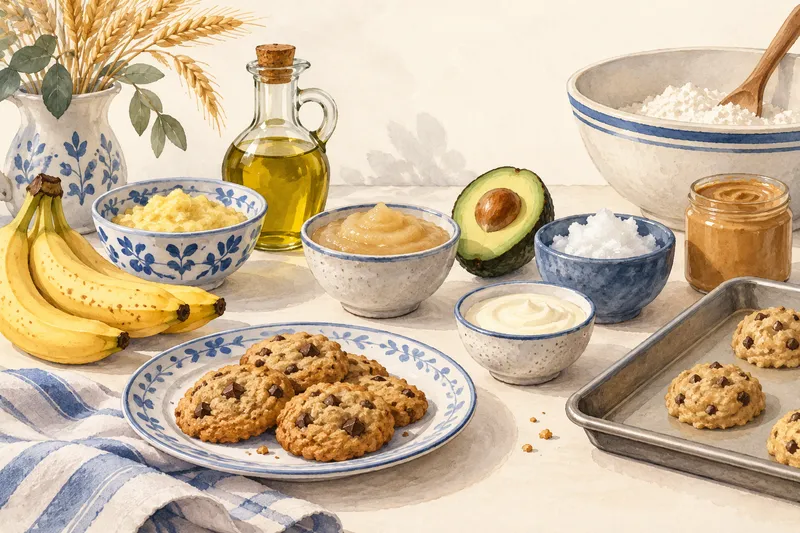
Match the replacement to the mixing method
Butter contributes fat, water, flavor, and sometimes the structure that holds air or separates pastry layers. Choose the method first. Oil poured into a creaming step cannot perform the same mechanical job as a solid fat.
A documented melted-fat alternative
King Arthur’s Classic Sandwich Bread lists 57g melted butter or 50g vegetable oil. That is a supported choice inside a complete loaf recipe. It also demonstrates why equal grams of butter and oil are not an automatic rule: the recipe gives different weights.
Keep the rest of that formula and method intact. Do not turn its 57-to-50 relationship into a conversion for cookies, cakes, or laminated pastry.
Decide by the method in your recipe
Scroll the table sideways if needed.
| Butter’s job | Practical choice | Limit |
|---|---|---|
| Melted and stirred into dough or batter | Use an oil option expressly listed in the recipe, as in the sandwich loaf above | Water, flavor and crumb can differ |
| Creamed with sugar | Look for a tested solid-fat version | Liquid oil cannot be creamed in the same way |
| Cut into flour for pastry | Choose a complete shortening or plant-butter pastry formula | Melting behavior and water content affect handling and layers |
| Brushed on a baked loaf | Select a finish for the flavor or surface you want | Changing a surface finish does not justify changing fat inside the dough |
Land O’Lakes lists shortening at the same amount as butter for a general substitution. Treat that as a starting option for suitable applications, with a likely flavor change, rather than evidence that every butter recipe will behave identically. Check the shortening product and any recipe-specific directions.
When the reason is avoiding dairy
“Plant-based” describes a product category, not its performance in your recipe. Compare whether it is a baking block or a spread, and follow a recipe tested with that type. Check ingredient and allergen labels separately; successful baking cannot verify an allergy claim.
For laminated dough, butter’s behavior is central to the method. A simple oil substitution would remove the layering mechanism; use a complete alternative formula rather than trying to preserve the original instructions with a different fat.
Can oil replace butter in cookies?
Oil can make a cookie, but it does not preserve the butter version automatically. In King Arthur’s comparison using its Basic Chocolate Chip Cookies, fats were swapped by volume in one base formula, all portions were chilled for 30 minutes, and the optional milk was omitted in every batch. Those controls matter when interpreting the result.
Its olive-oil batch spread the most and had a crackly surface with a crunchier, more uniform texture. Its shortening batch was softer, paler, and less flavorful than the butter batch. These are the publisher’s observations, not trials performed for this site, and not a prediction that every cookie changes in the same direction.
For a practical choice, use a complete cookie formula written for oil when that is the fat you have. If adapting a butter formula, keep a record of its creaming or melted-fat method and compare a small batch. Do not copy the sandwich-bread weight ratio above into this cookie task or promise identical spread, chewiness, or flavor.
Sources & scope
Reference synthesis and arithmetic where indicated. No first-hand kitchen testing is claimed.
- Butter vs. shortening in bakingLand O’Lakes · Accessed 2026-10-06
- Why does butter temperature matter in pastry?King Arthur Baking · Accessed 2026-10-06
- Classic Sandwich BreadKing Arthur Baking · Accessed 2026-10-06
- Butter? Oil? Shortening? Which fat makes the best chocolate chip cookies?King Arthur Baking · Accessed 2026-10-06