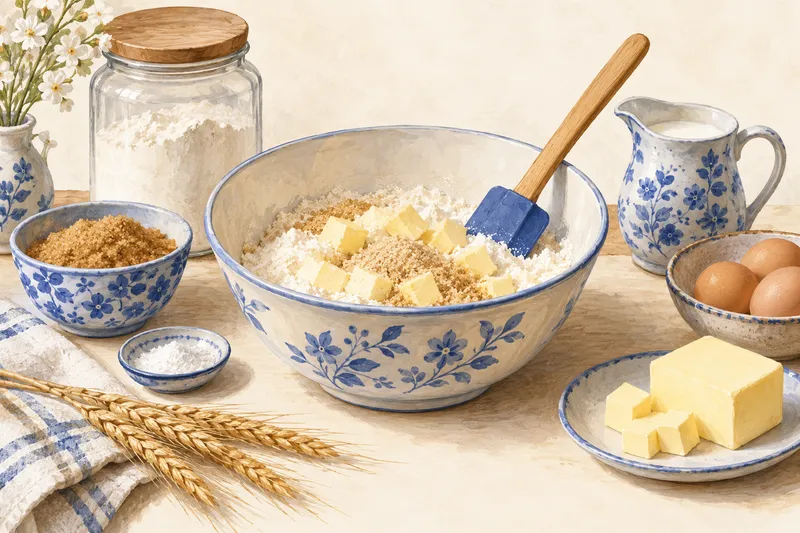
Butter meets the dry ingredients first
Reverse creaming, also called the paste method, incorporates softened butter into dry ingredients before the later liquid additions. It differs from first beating butter and sugar together to aerate them.
King Arthur explains that coating flour with fat limits gluten development. The method can produce a tender, close crumb and layers with less doming. Those are style characteristics, not proof that it is the best method for every cake.
Follow the recipe’s stages
Look for the specified butter condition, first mixing endpoint, division of liquids, and later mixing times. Some formulas include part of the liquid early. The name “reverse creaming” does not supply all of those details by itself.
A sandy-looking early mixture may be expected. Compare it with the chosen recipe’s description before adding extra liquid to make it look like conventional creamed batter.
Do not reorder an unrelated recipe automatically
A cake formula and its method work together. If you want to try the technique, start with a cake developed for it. Simply reversing the first two steps of any butter cake does not establish the right mixing sequence.
Build a stage checklist
Before starting, list when butter, dry ingredients, eggs, and each liquid portion enter. Mark each step as completed. Scrape the bowl as directed so the batter at the base is incorporated.
Compare after cooling
Record the final crumb, height, and doming under the same pan and oven conditions. A tighter crumb can be intentional. If the cake is unusually heavy or gummy, review the complete method and doneness checks before deciding that all reverse-creamed cakes behave that way.
Sources & scope
Reference synthesis and arithmetic where indicated. No first-hand kitchen testing is claimed.
- Reverse creamingKing Arthur Baking · Accessed 2026-10-06