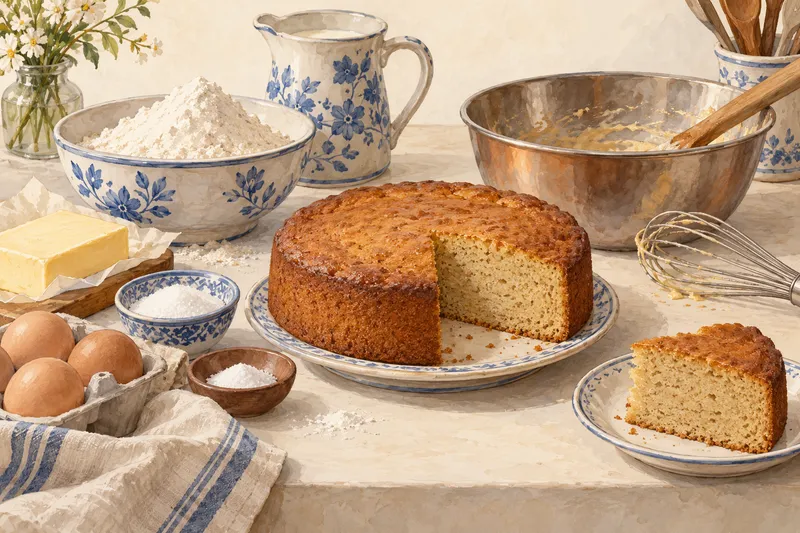
Describe where the cake is dense
A uniformly fine pound-cake crumb is different from a compressed, gummy band beneath a light top. Let the cake cool and compare it with the intended style before identifying a fault. A photograph alone cannot establish whether the cause was mixing, flour, or underbaking.
Start with the method the recipe uses
Sally’s dense-cake guidance identifies creaming as an important source of air in butter cakes. That check belongs to recipes that cream butter and sugar; it does not transfer to a melted-fat cake or a sponge relying on whipped eggs.
Scroll the table sideways if needed.
| Observation or recorded deviation | Check first | Next batch action |
|---|---|---|
| Butter stayed in hard lumps during a creaming step | Butter condition and the recipe’s creaming cue | Prepare butter to that cue; scrape the bowl rather than extending mixing blindly |
| Whipped eggs lost volume before the batter reached the pan | Delay and folding method | Prepare the pan first and follow the specified folding sequence |
| Entire cake feels heavier after a flour substitution | Flour identity and actual weight | Repeat with the specified flour before altering leavening |
| Center is wet or compressed while edges are set | Pan dimensions, batter depth and center endpoint | Restore the specified pan and check the center rather than surface color alone |
The table is an order of investigation, not a diagnosis from appearance. If several things changed, start with the clearest departure from the original method.
A documented flour comparison
King Arthur’s flour guidance names its Traditional Angel Food Cake: using its unbleached cake flour instead of all-purpose yields a taller, more tender cake. It also warns that freely replacing all-purpose with cake flour in formulas developed for all-purpose can produce weak or sunken results.
That example shows why “use cake flour for any dense cake” is an incomplete fix. Restore the flour intended by your recipe before deciding it needs a different formula. Brand protein values and flour treatment also limit how broadly a publisher’s comparison applies.
Record a useful repeat
Keep ingredient weights, pan, batch size, and oven setting consistent. Note the batter’s condition after creaming or whipping and before baking. Compare fully cooled slices from the same part of the cake. If the cake is primarily dry rather than compressed, continue with the dry-cake guide; adding liquid is not an established cure for failed aeration.
Your next-batch checklist
Use this while reviewing the recipe. Selections stay on this page only.
Sources & scope
Reference synthesis and arithmetic where indicated. No first-hand kitchen testing is claimed.
- How to prevent a dry or dense cakeSally’s Baking · Accessed 2026-10-06
- Cake flour vs. all-purpose flourKing Arthur Baking · Accessed 2026-10-06