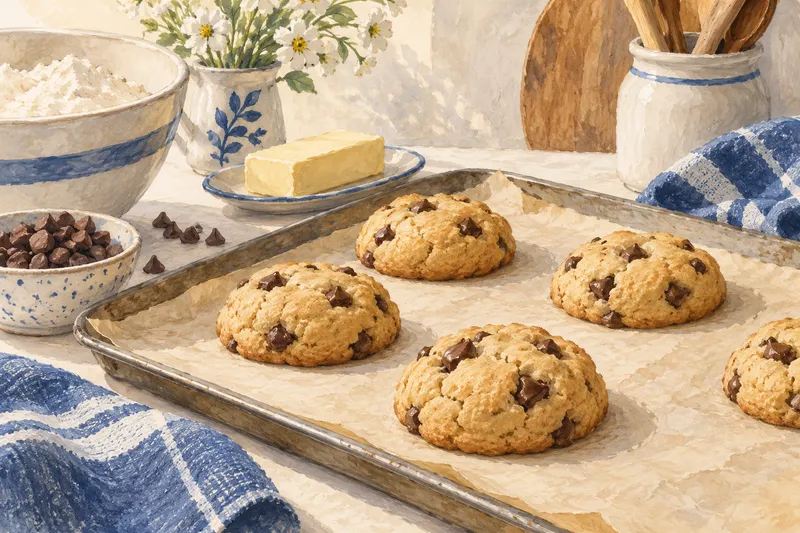
First check whether your recipe is supposed to spread. A thick cookie or a shape-holding cut-out is different from a drop cookie intended to flatten in the oven. This checklist is for unexpected lack of spread, not a requirement to make every cookie thinner.
Choose the first useful check
Scroll the table sideways if needed.
| What you notice | Compare with the recipe | What to investigate |
|---|---|---|
| Dough is unusually stiff or floury | Flour amount and measuring method | Whether extra flour entered the dough |
| Dough is much colder than instructed | Chill and post-chill instructions | Whether it is being portioned or baked at the wrong stage |
| Cookies keep a tall mound | Shaping or flattening step | Whether the recipe expected a different starting shape |
| You reduced butter or changed the pan | Original formula and tray | Whether the change affected spread |
Handle the Heat identifies excess flour, reduced fat, cold dough, and some pan choices as possible causes. These are checks, not a diagnosis from appearance alone.
Recheck flour before adding anything
Sally’s Baking highlights excess flour when cookies resist spreading. Compare your actual amount with the recipe’s grams or its cup-measuring method. A packed or scooped cup can differ from the intended measurement.
If the dough is already mixed and the amount is unknown, there is no reliable universal spoonful of liquid or fat that restores the original formula. Return to the recipe author’s advice instead of stacking adjustments.
Keep deliberate cold-butter methods separate
Some recipes are designed for cold butter and limited spread, as King Arthur’s cold-butter article explains. Do not remove a required chill or warm every dough merely because a different recipe spreads more.
Record one change
For the next batch, write down the clearest departure from the recipe and correct that first. Keep portion size consistent so a smaller scoop does not masquerade as a successful formula change. The scoop reference explains capacity; it cannot predict the final baked diameter.
A measurement error you can quantify
If the recipe specifies 240 g flour and your notes show 300 g, the known difference is 60 g, or 25% more flour than specified. That is a useful lead for the next batch. It is not a reason to add 25% more of every other ingredient to dough already mixed.
If you only know that you scooped two cups, you cannot assign an exact excess retrospectively. For the next batch, use the recipe’s weight or its cup-measuring method, and keep the portion size and required chill the same.
Your next-batch checklist
Use this while reviewing the recipe. Selections stay on this page only.
Sources & scope
Reference synthesis and arithmetic where indicated. No first-hand kitchen testing is claimed.
- Ultimate Cookie Troubleshooting GuideHandle the Heat · Accessed 2026-10-10
- 5 Cookie Baking Tips to Improve Your Next BatchSally’s Baking · Accessed 2026-10-06
- The hottest cookies are made with cold butterKing Arthur Baking · Accessed 2026-10-06