Two meanings of proofing
Proofing yeast checks whether a sample is active. Proofing dough is a fermentation stage after mixing or shaping. A foamy cup is evidence about the yeast sample; it does not establish that your finished dough has risen enough.
A manufacturer’s activity test
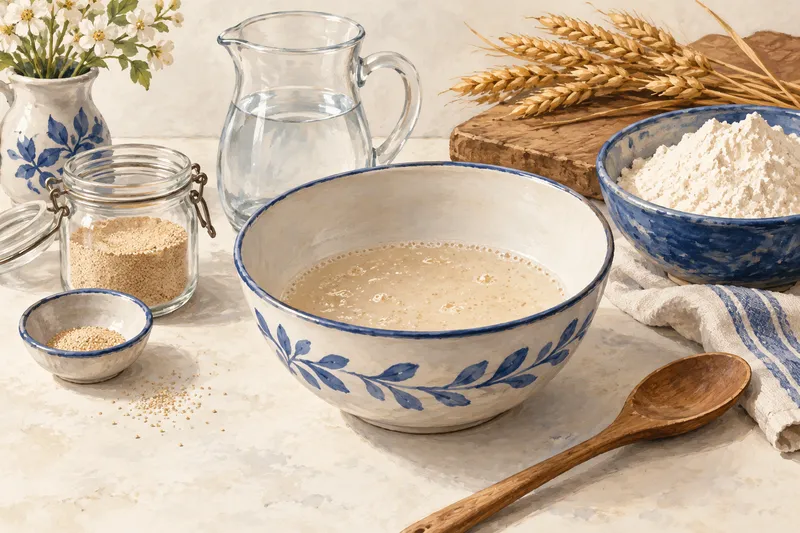
Red Star’s dry-yeast test uses 7 g yeast, 1 teaspoon sugar, and 1/2 cup water at 110–115°F. In a one-cup measuring vessel, the mixture should foam to the one-cup line within ten minutes. Follow its full method linked below, including dissolving the sugar first.
If using that mixture in a recipe, count all three ingredients toward the formula: its 7 g yeast, 1 teaspoon sugar, and 1/2 cup water. Do not add the recipe’s full quantities again. If the recipe calls for less yeast or water than the test contains, do not pour in the whole test mixture. This test is not a recipe for a loaf.
When to check first
Check the package type, date, and storage instructions. A product described as nutritional yeast will not replace baker’s yeast. Use the activity test when the freshness of suitable dry yeast is uncertain; check the manufacturer’s instructions before treating all yeast products alike.
If the sample fails
Under Red Star’s specified test conditions, a sample that fails to reach the stated mark should be discarded. Before repeating, verify the thermometer, quantities, and vessel size. A guessed water temperature or an oversized bowl makes the result harder to interpret.
Do not keep adding yeast to an already mixed dough without checking the formula. For a dough that is simply slow, use the separate not-rising guide and record dough temperature and elapsed time.
Sources & scope
Reference synthesis and arithmetic where indicated. No first-hand kitchen testing is claimed.
- Dry yeast activity testRed Star Yeast · Accessed 2026-10-06