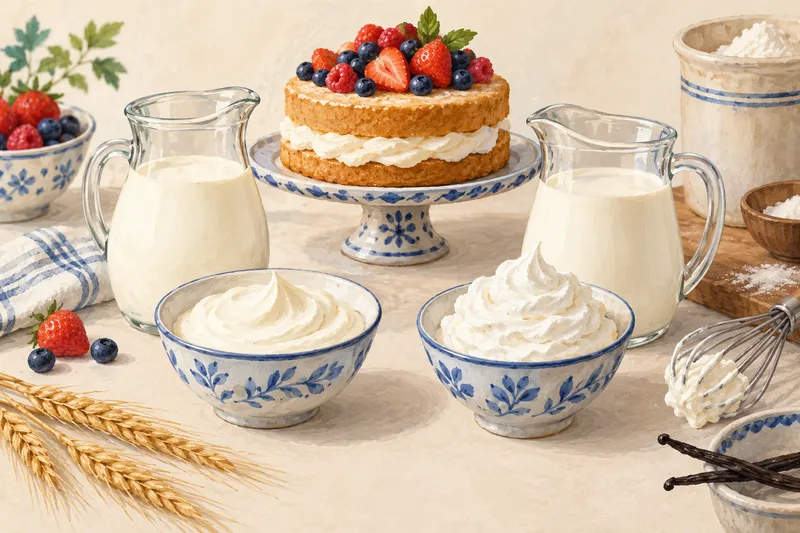
The labels describe different fat ranges
King Arthur’s US-focused whipping guide distinguishes whipping cream around 30–35% fat from heavy cream at 36% or more. Heavy whipping cream is another label commonly used for the higher-fat product. Check the actual carton when choosing for a recipe.
Both can be used for whipping in suitable recipes, but plain milk does not supply the same fat structure. A milk-and-melted-butter mixture is not automatically a whipped-cream substitute.
Choose for the intended result
For piped decoration, mousse, or a filling that depends on stable whipped volume, follow the specified cream and preparation. For an unwhipped sauce or batter, the recipe may be more flexible, but fat and water balance still matter.
Keep cream cold when whipping and follow the recipe’s endpoint. Continuing beyond the intended texture is not a way to make the same cream indefinitely firmer.
Regional labels need their own check
Double cream and light cream are not direct translations of every US whipping product. Look for fat information and producer guidance rather than replacing solely by the name. This page does not supply a universal cross-country volume ratio.
Before opening the carton
Read whether the recipe calls for the cream to be measured before whipping. Check whether sugar or flavoring is already included in a prepared product. Record the product used if you need to repeat a particular filling or decoration.
Use the separate heavy-cream substitution guide if the required product is unavailable.
Does one cup mean before or after whipping?
Read the ingredient wording and method together. A cup of liquid cream is not a cup of whipped cream: whipping changes volume. If the recipe lists cream and then tells you to whip it, measure the liquid first. A prepared whipped topping is another product and may already contain sugar.
Sources & scope
Reference synthesis and arithmetic where indicated. No first-hand kitchen testing is claimed.
- How to make whipped creamKing Arthur Baking · Accessed 2026-10-06