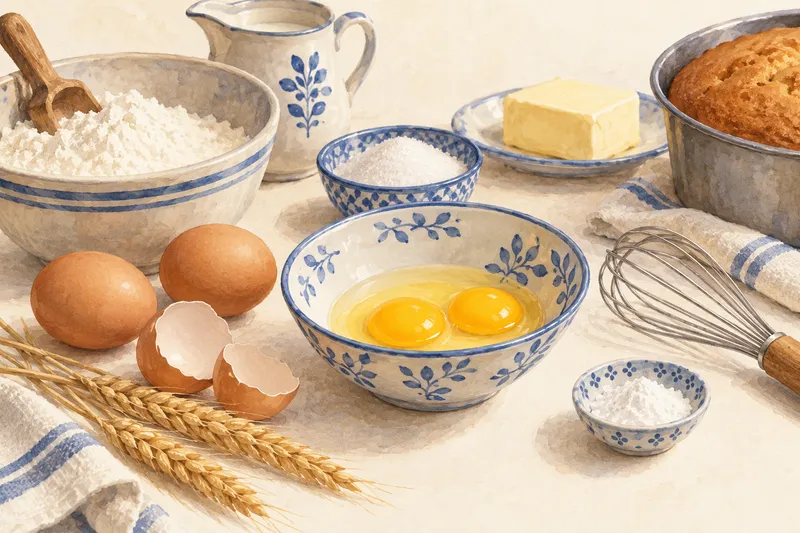
Eggs are more than a liquid measurement
Eggs can contribute structure, emulsification, aeration, color, and flavor. The importance of each role depends on the recipe. A custard, sponge cake, and cookie therefore need different thinking when eggs are changed.
Whipped egg whites can hold air that helps lift a baked mixture. The recipe’s whipping and folding steps preserve that structure. Yolks contribute different properties, including fat and emulsifying components; whole eggs combine white and yolk.
Read the method for clues
- Separated eggs and whipped whites: the foam is a deliberate part of the structure.
- Eggs gradually beaten into fat: mixing and incorporation are part of the method, not just an order for convenience.
- A custard cooked until set: the egg contribution is central to the result.
- Egg brushed outside dough: a surface finish is a separate use.
Size and amount matter
Use the egg size specified by the author. If scaling requires part of an egg, weigh the relevant beaten egg component without the shell rather than guessing half from appearance. A recipe calling for whites is not asking for the same weight of whole egg.
Substitution decisions
Choose an alternative for the role, not simply a list entry labeled ‘one egg.’ A binder cannot be assumed to replace a foam, and a surface wash alternative does not validate an internal substitution.
Keep any adaptation note precise: number or weight, whole egg versus white or yolk, and the mixing stage. That record makes a later texture issue much easier to investigate.
Sources & scope
Reference synthesis and arithmetic where indicated. No first-hand kitchen testing is claimed.
- Egg functionality in bakingAmerican Egg Board · Accessed 2026-10-06
- Egg leavening functionalityAmerican Egg Board · Accessed 2026-10-06