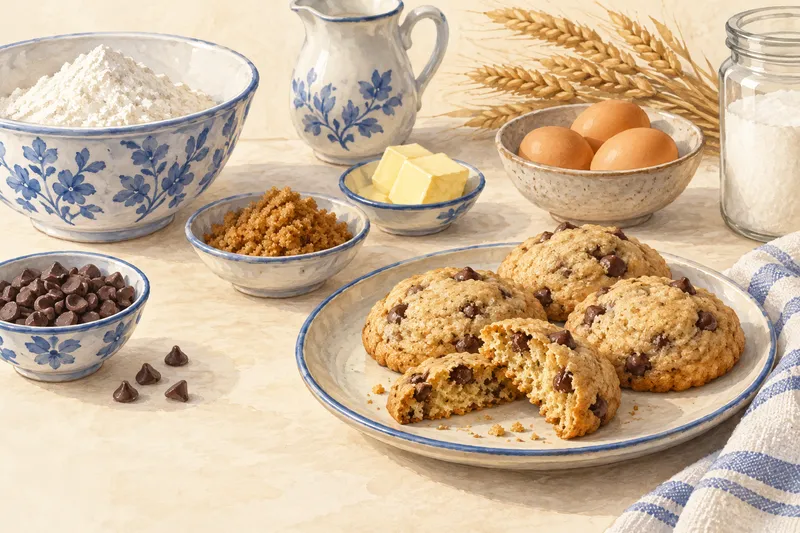
Check the crumb, not just the height
A cakey cookie has a soft, cake-like interior after cooling. A thick cookie can still be chewy, so height alone does not identify the problem. Compare a cooled cookie with the recipe’s intended texture before changing the dough.
A published example of what changes the texture
In King Arthur’s cookie science trial, adding 2 tablespoons of milk to its chocolate chip cookie recipe produced a cakier result. That is an observed result in that formula, not a rule to remove 2 tablespoons of liquid from every cakey cookie.
Use this example to check whether you added milk to loosen stiff dough, changed the egg amount, or used a replacement with additional moisture. If you did, return to the original quantities for the next batch. Cutting the required egg or liquid would create another recipe change rather than undoing the first one.
Work through the batch in this order
- Verify the recipe version. Some pumpkin, cake-mix, and soft chocolate cookies are intended to have a cake-like crumb. Compare like with like.
- Audit flour measurement. Check the actual weight against the author’s weight. Include flour used while shaping. King Arthur’s crinkle troubleshooting identifies extra flour added to loose dough as a cause of cakier crinkles; the dough is intended to firm during chilling.
- Audit substitutions and additions. Write down extra milk, the egg size, and any purée or yogurt replacement. Changing moisture and egg function can change the result even when the dough looks easier to handle.
- Check leavener identity and amount. Confirm you used the specified powder or soda. Do not exchange them spoon for spoon to force more spread.
Make the next batch informative
Correct one documented deviation first. Keep portion weight, chilling, pan, and bake time consistent. Photograph a cooled cross-section and record whether the change affected height, spread, chew, or dryness. Those are separate observations.
If there was no deviation, choose a recipe explicitly developed for chewy cookies instead of repeatedly stripping ingredients out of a cakey formula. For cookies that remain dense and scarcely spread, use the not-spreading guide to investigate that symptom separately.
Your next-batch checklist
Use this while reviewing the recipe. Selections stay on this page only.
Sources & scope
Reference synthesis and arithmetic where indicated. No first-hand kitchen testing is claimed.
- Cookie scienceKing Arthur Baking · Accessed 2026-10-06
- How to get the crinkliest crinkle cookiesKing Arthur Baking · Accessed 2026-10-06