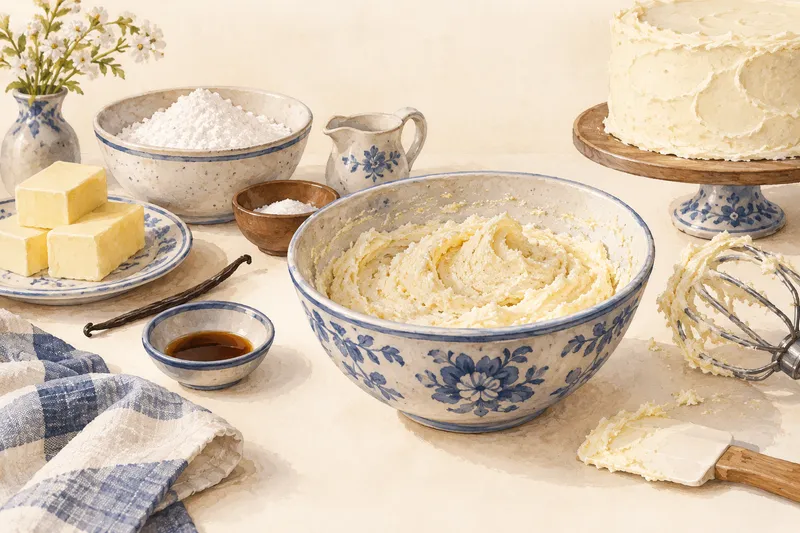
Name the buttercream before treating it
American buttercream typically uses confectioners’ sugar. Swiss meringue buttercream begins with heated egg whites and sugar. A remedy for one method does not automatically suit the other.
Describe the texture
| What you observe | What to investigate |
|---|---|
| Sandy grit throughout | Sugar type and dissolution stage |
| Distinct pale pieces | Butter condition and incorporation |
| Curdled appearance with liquid separation | Temperature and emulsion |
| Visible dry lumps | Ingredient preparation and bowl scraping |
A photograph may show lumps but cannot tell you which ingredient formed them.
Sugar grit in Swiss buttercream
Sally’s guidance identifies insufficient sugar dissolution during the initial heating stage as a possible cause of gritty meringue. Check that stage before blaming the final whipping time. The next batch should follow the recipe’s heating and texture endpoints precisely.
Do not heat a completed bowl indiscriminately in an attempt to dissolve sugar: that can melt the butter and create another problem.
If it is actually curdled
Use the split-buttercream guide. King Arthur distinguishes a cold, curdled mixture from a warm, runny one. Those conditions need different temperature corrections.
Keep a short preparation log
Record sugar product, butter condition, heating endpoint where applicable, cooling stage, and when the texture changed. If the mixture was smooth until an added flavoring, record that amount too.
Avoid adding large amounts of sugar just to hide the texture. It changes sweetness and proportions without necessarily resolving the cause.
Your next-batch checklist
Use this while reviewing the recipe. Selections stay on this page only.
Sources & scope
Reference synthesis and arithmetic where indicated. No first-hand kitchen testing is claimed.
- Swiss meringue buttercreamSally’s Baking · Accessed 2026-10-06
- How to fix broken buttercreamKing Arthur Baking · Accessed 2026-10-06