Read the ratio in order
In this guide, 1:2:2 means one part retained starter, two parts flour, and two parts water, all measured by weight. Other authors may use different notation, so check their definition before copying a number.
For a 150 g feed at that ratio, use 30 g starter, 60 g flour, and 60 g water. The total is 150 g. The starter-feeding calculator repeats this arithmetic for your chosen total.
Feeding ratio is not hydration
The feeding ratio describes the additions relative to retained starter. Hydration describes water relative to flour. A starter fed equal flour and water is commonly maintained at 100% hydration, but the retained starter’s composition matters when changing an existing stiff or liquid culture.
Use the sourdough-hydration calculator when accounting for starter inside a bread formula.
Choose a routine you can observe
King Arthur’s feeding-ratio trials show that changing the amount of fresh feed relative to starter changes the progression under the tested conditions. A larger feed is not a universal instruction to wait a particular number of hours.
Record the ratio, flour, temperature, and rise pattern. Keep those conditions steady before drawing a conclusion about timing.
Separate maintenance from baking preparation
A storage routine keeps a culture going; a bread recipe may ask for a freshly fed, ripe portion. Read both sets of instructions before planning the day. If you need starter for a loaf and a reserve to maintain, include both quantities in the total.
Use clean equipment and leave expansion space. For contamination signs or uncertain handling, consult the dedicated safety reference before using or sharing the starter.
Is a 1:2:2 feeding the same as 200% hydration?
No. The feeding numbers describe starter, flour, and water weights. With a 100%-hydration seed, 20 g starter plus 40 g flour and 40 g water contains 50 g total flour and 50 g total water: still 100% hydration. If the seed has another hydration, include its inherited flour and water in the calculation.
Discard is a portion, not a different culture
Discard is starter removed during maintenance, often before the next feed. A bread recipe asking for ripe starter generally needs the active, freshly fed stage it describes. Do not substitute an equal weight of inactive discard and assume the same rise.
Removing some starter keeps the amount and feeding requirement manageable. Consider a jar with 100 g starter. Keeping all of it and feeding at 1:1:1 creates 300 g; repeating that with the entire jar creates 900 g, then 2,700 g. The ratio stayed constant while the maintenance quantity grew. This is arithmetic, not a fermentation prediction.
Can a routine avoid waste?
Plan the bake and the reserve first, then feed only the retained portion needed. A small maintenance routine can reduce excess; “no discard” does not mean unlimited additions to the same full jar. Use excess only from an appropriately maintained, uncontaminated culture in a recipe that cooks it. See starter safety before saving or sharing discard.
A named refrigerated maintenance example
King Arthur’s maintenance guide retains 113 g starter and adds 113 g water and 113 g flour for its weekly refrigerated routine. It leaves the fed jar out until bubbling begins, about one to two hours under its conditions, before returning it to refrigeration. This yields 339 g, including the reserve. Its room-temperature routine feeds more often; follow the full procedure rather than attaching the weekly interval to a warm jar.
Choose a feeding time when you can observe the culture. Morning versus evening alone does not determine readiness; temperature, ratio, flour, and the starter’s history affect the schedule.
What the jar contains
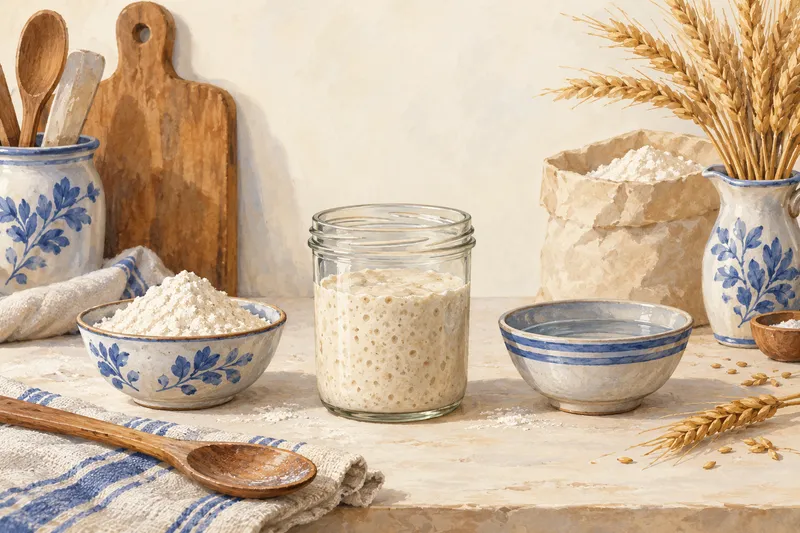
A conventional sourdough starter is a maintained flour-and-water culture. Feeding replenishes it with fresh flour and water; the culture’s yeasts and bacteria participate in fermentation. A jar used for maintenance is not a finished bread dough: the bread recipe supplies the rest of its flour, water, salt, and method.
Use the recipe’s stated starter condition, such as ripe or unfed, and count the starter’s flour and water when calculating dough hydration. The word “sourdough” alone does not provide a feeding schedule or certify a jar’s safety. Consult the culture-handling reference before tasting, sharing, or saving an uncertain starter.
Feeding a starter is not scaling the whole dough
A feed calculator portions the contents of the starter jar. A dough formula needs all the flour, water, salt, and other ingredients in the dough. Baker’s percentage expresses each ingredient against total flour = 100%, not against total dough weight.
As arithmetic only, 500 g total flour + water at 70% + salt at 2% + yeast at 1% = 865 g dough. The percentages sum to 173%, so 500 × 1.73 gives the total. This is a teaching example, not a bread recipe or a recommendation for yeast or salt levels.
Use the dough formula calculator when you have a complete percentage formula and need ingredient weights or a target total. If flour and water are already counted in a preferment, do not add the whole starter again: first split its components using the hydration calculator. Equal dough portions are raw weights, not finished loaf weights after moisture loss.
Sources & scope
Reference synthesis and arithmetic where indicated. No first-hand kitchen testing is claimed.
- Sourdough feeding ratiosKing Arthur Baking · Accessed 2026-10-06
- Maintain sourdough starterKing Arthur Baking · Accessed 2026-10-06
- Sourdough starter best practicesColorado State University Extension · Accessed 2026-10-06
- Baker’s PercentageKing Arthur Baking · Accessed 2026-10-06