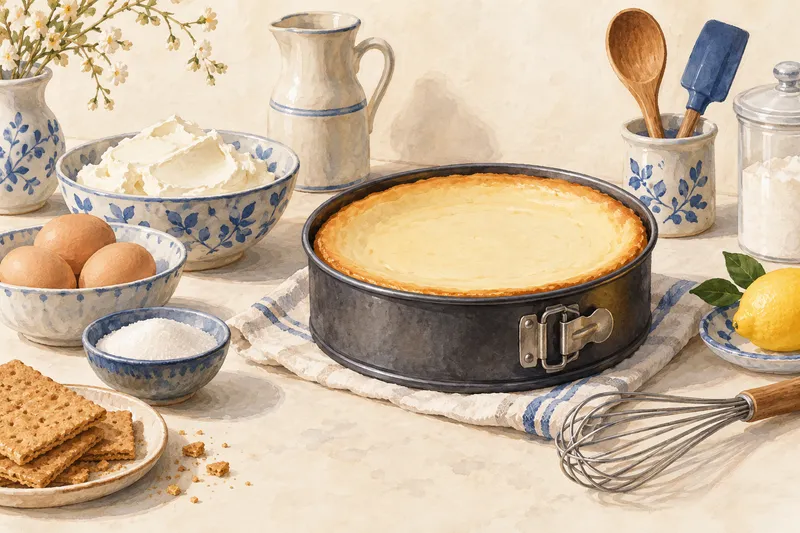
Use the cheesecake style and the measuring location together
A baked cheesecake may still move in the center when it reaches its intended endpoint. A loose liquid wave is different from a small set area that jiggles. Neither a wobble description nor an isolated temperature is a universal safety test for every cheesecake formula.
What King Arthur’s temperature guidance means
King Arthur’s discussion of cheesecake cracking distinguishes creamier and firmer baked cheesecakes. Its probe is inserted halfway into the filling; the “edge” reading is taken 1–2 inches in from the edge, not against the pan.
Scroll the table sideways if needed.
| Intended texture in that guidance | Reading near the edge | Reading at the center |
|---|---|---|
| Super-creamy | 165–170°F | 150–155°F |
| Firmer | No more than 175°F | 165°F |
These are the publisher’s texture benchmarks in its baking context, which accounts for continued cooking during cooling. They are not a standalone instruction to stop any egg-containing dessert at 150°F. Use a complete tested cheesecake recipe, including its baking and cooling method; general food-safety guidance addresses raw-egg handling separately.
Check the same places consistently
- Identify whether the recipe is a conventional baked cheesecake, a browned Basque style, or a no-bake preparation. This page’s baked cues do not apply to all three.
- Near the expected endpoint, gently move the pan and observe whether the outer filling is set. Do not shake it vigorously or demand a completely rigid center.
- If using the recipe’s thermometer method, keep the probe in the filling and record its depth and position. Avoid touching the pan or reading only a hotter outer band.
- Complete the specified cooling and chilling before assessing the final slice. Cutting the warm cake does not measure its chilled texture.
Protect the result during cooling and service
Use the complete recipe’s cooling schedule and refrigerate promptly within safe handling limits. FDA perishable-food limits: refrigeration 40°F or below; exposure 2 hours, or 1 hour above 90°F. Do not extend counter cooling indefinitely to prevent a cosmetic crack.
Sources & scope
Reference synthesis and arithmetic where indicated. No first-hand kitchen testing is claimed.
- Why did my cheesecake crack?King Arthur Baking · Accessed 2026-10-06
- Food safety by type of foodFoodSafety.gov · Accessed 2026-10-06
- Are you storing food safely?FDA · Accessed 2026-10-06