Plain layers are the simplest starting point
Sally’s make-ahead method focuses on cooled cake layers wrapped securely before freezing. Keeping layers plain allows filling and decoration closer to serving, when their texture and appearance are easier to control.
Do not apply a plain-layer method automatically to a fully assembled cake containing custard, whipped cream, or delicate decorations. The complete cake needs instructions suited to every component.
Prepare a useful package
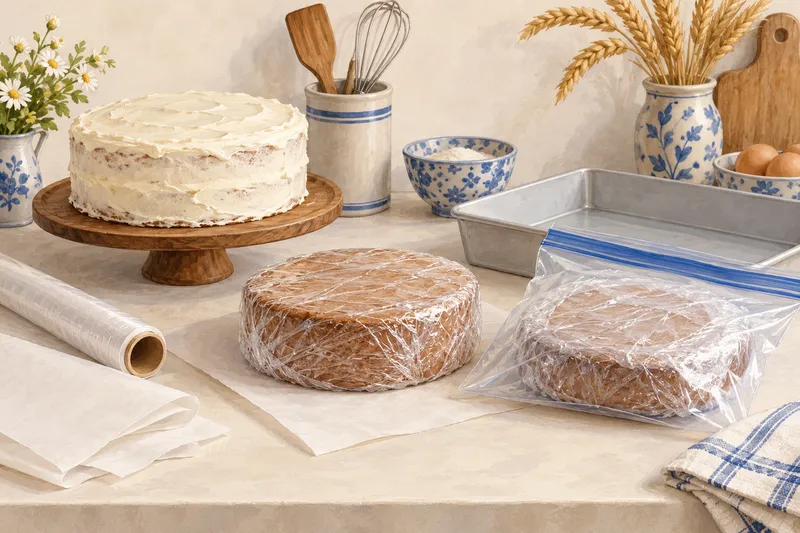
Cool the layer according to its recipe. Wrap it well using freezer-suitable materials and protect it from being crushed. Label the cake flavor, layer size, bake date, and whether it contains an unexpected allergen or adaptation.
Package layers individually if you expect to use them at different times. Keep the source recipe with your planning notes so the freezer label does not become the only remaining instruction.
Thaw with the next step in mind
The cited method keeps wrapping on during thawing to help condensation collect on the wrapping rather than directly on the cake. Follow that recipe’s thawing setting and timing; a filled cake may require refrigeration even when a plain layer does not.
Allow enough time for thawing, filling, any necessary chilling, and decoration before serving. A frozen layer is not a shortcut that removes all of those stages.
Inspect the result honestly
Freezing may be useful for scheduling, but it does not repair an underbaked or collapsed layer. If testing a new recipe for an event, compare a small frozen-and-thawed portion before committing the full cake. Record the packaging and thaw method so the result is repeatable.
Thaw the plain layers before decorating
Sally’s method wraps each completely cooled layer in plastic wrap, then foil, and plans up to three months frozen for quality. It thaws wrapped layers in the refrigerator a day ahead, allowing at least eight hours; the needed time varies with size. Keeping the wrapping on directs condensation toward the wrapping during the thaw.
Unwrap after thawing and follow the cake recipe’s assembly instructions. A frosting that requires cool cake will soften against a warm layer, even if the layer was originally frozen. A fully decorated cake or cheesecake needs its own component-specific plan; the plain-layer timetable does not establish that its filling or decorations freeze well.
Sources & scope
Reference synthesis and arithmetic where indicated. No first-hand kitchen testing is claimed.
- How to freeze cakesSally’s Baking · Accessed 2026-10-06