A practical substitute, not identical flour
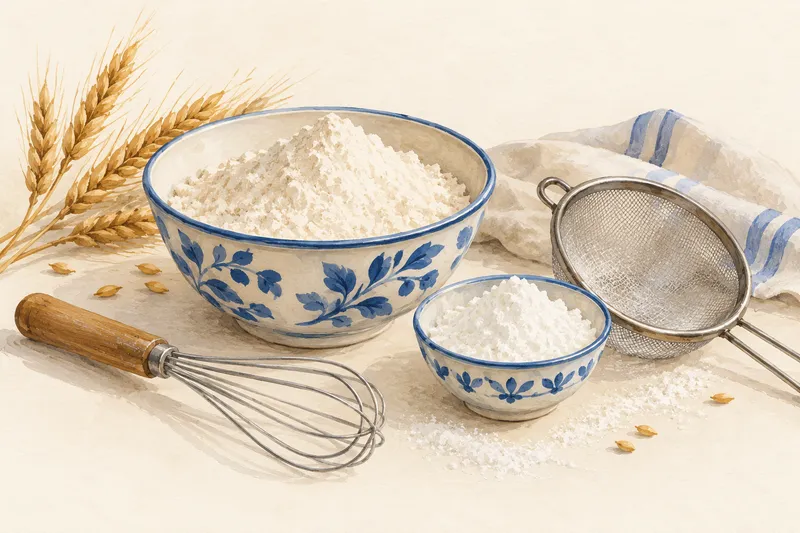
King Arthur’s reference blend combines 105 g all-purpose flour with 14 g cornstarch. Whisk thoroughly before using it as the cake-flour replacement described in that source. The combined amount is 119 g; it is not a new universal definition of a cup of flour.
Replacing some wheat flour with starch reduces the blend’s gluten-forming potential. It does not reproduce every property of a commercially milled cake flour. Brand, flour treatment, and the particular cake still matter.
Measure the blend deliberately
Weigh each ingredient into a clean bowl, mix until evenly distributed, then weigh the amount your recipe requires. If you need more blend, scale both components by the same factor. Do not add the cornstarch on top of the recipe’s full flour quantity: that would increase total dry ingredients instead of replacing part of them.
For an example of the arithmetic, doubling the reference blend gives 210 g flour plus 28 g starch, or 238 g total. This is a mathematical scale-up of the source blend, not a kitchen test.
Three products to keep separate
- Cake flour is chosen for tenderness and the recipe’s intended structure.
- Cornstarch is a starch ingredient; using it alone does not supply wheat flour’s structure.
- Self-rising flour contains leavening and often salt. It is not a shortcut to cake flour.
When precision matters most
For a delicate foam cake or a recipe specifying a particular cake flour, buy the specified product or use an author-approved alternative. If the recipe already supplies gram weights, follow those weights rather than converting them through a second cup convention. Keep your substitution note for the next bake so a texture change is not mistaken for an oven problem.
Is cake flour just flour with cornstarch?
No. Commercial cake flour is a particular flour product; adding starch to all-purpose flour creates a blend intended to approximate some of its baking behavior. Use the blend as a fallback in an appropriate recipe, and expect a possible difference in crumb. It also remains a wheat-containing ingredient.
Weigh out a target amount
For 200 g of the completed substitute, the arithmetic is a factor of 200 ÷ 119. Apply that factor to both components: approximately 176.47 g flour and 23.53 g starch, then combine. The recipe scaler can calculate this from 105 g flour and 14 g starch with an original amount of 119 and target of 200.
Those decimal places show the calculation, not a requirement for that scale resolution. Mixing a larger batch and weighing out the required portion is another way to avoid tiny fractional quantities.
Sources & scope
Reference synthesis and arithmetic where indicated. No first-hand kitchen testing is claimed.
- How to make cake flourKing Arthur Baking · Accessed 2026-10-10
- How to measure flour the right wayKing Arthur Baking · Accessed 2026-10-10