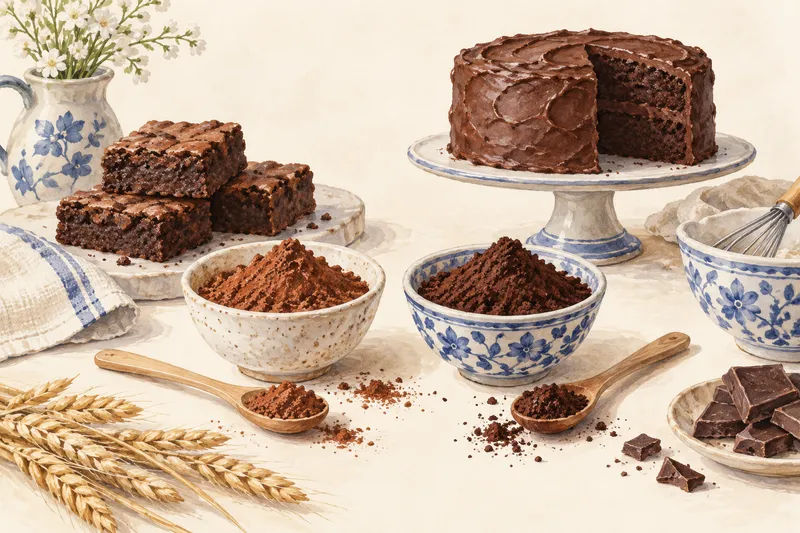
Read the cocoa label first
Dutch-process cocoa has been treated to reduce its acidity. Natural cocoa retains more acidity. That difference can matter alongside the recipe’s leaveners; color and flavor can change too. Neither name means sweetened drinking-chocolate mix.
A practical decision table
Scroll the table sideways if needed.
| Recipe wording | Best next step |
|---|---|
| Explicitly allows either type | Use either permitted unsweetened cocoa |
| Specifies natural cocoa | Keep natural unless the author provides an adjustment |
| Specifies Dutch-process | Follow that choice or its documented alternative |
| Old recipe says only cocoa | Investigate the original convention before changing leavening |
King Arthur notes that older American recipes often assumed natural cocoa. A modern recipe may be more flexible, but that cannot be established from the ingredient name alone.
Do not change soda by color
A darker powder is not a reliable instruction to add or remove a spoonful of baking soda. Review the whole formula, including other acidic ingredients, and use the recipe’s tested substitution guidance.
Compare the result fairly
Keep the cocoa brand, type, and gram weight in your baking notes. If making a permitted comparison, keep pan size, mixing, and baking checks the same. Judge the cooled bake for flavor and texture, not just darkness.
If all you have is sweetened cocoa mix or melted chocolate, choose a recipe developed for that ingredient. Those products introduce a different balance of sugar, fat, and solids.
If the missing ingredient is cocoa itself
Use the cocoa-substitution decision guide to distinguish chocolate, drinking mix, syrup, and a different complete recipe. The table here compares unsweetened cocoa types; it does not provide a chocolate-bar or syrup ratio.
When cocoa is mainly a flavor choice
King Arthur notes that preparations without baking soda or baking powder, such as certain cocoa frostings, can use either natural or Dutch-process cocoa because the cocoa is not supplying the acid for chemical leavening. Follow the complete recipe’s quantity and expect a flavor/color difference.
That is a different decision from replacing natural cocoa in a soda-leavened cake. Identify the recipe family and all its leaveners first; do not borrow a frosting’s flexibility for a batter simply because both contain cocoa.
Sources & scope
Reference synthesis and arithmetic where indicated. No first-hand kitchen testing is claimed.
- Dutch-process vs. natural cocoaKing Arthur Baking · Accessed 2026-10-06